|
|
|
Keynote Speakers |
|
|
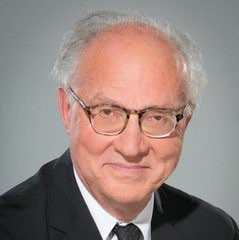
Prof.Paulo Canas Rodrigues
Paulo Canas Rodrigues is a Professor of Statistics and Data Science at the Federal University of Bahia and the Director of the Statistical Learning Laboratory (SaLLy; www.SaLLy.ufba.br). Paulo completed his Ph.D. in Statistics at the Nova University of Lisbon, Portugal (2012), and his Habilitation in Mathematics, with a specialization in Statistics and Stochastic Processes, at the Lisbon University, Portugal (2019). His research in time series forecasting, statistical learning, artificial intelligence, statistics, and data science resulted in more than 130 scientific papers in collaboration with more than 200 co-authors from 95 universities in 31 countries and delivered more than 200 invited talks at conferences and scientific seminars. He is an Elected Member of the International Statistical Institute. Among other activities, he is the current President of the International Association for Statistical Computing, the Past-President of the International Society for Business and Industrial Statistics, a Member of the Representative Council of the International Biometric Society, and a Council Member of the International Statistical Institute. Website: www.paulocanas.org; www.SaLLy.ufba.br. Title: From Data to decisions: Statistics, AI, and real-world business applications
Abstract: In recent years, data science and artificial intelligence have become central to decision-making in business and industry. However, the real value of these tools does not come from complexity alone, but from how different approaches are combined and applied to real problems. In this talk, I present a practical perspective on data-driven decision-making, bringing together statistical models, machine learning, and more recent AI approaches. Rather than focusing on a single method, I show how these techniques can be used in a complementary way, with each model capturing different aspects of the data. Examples will include forecasting, pattern discovery, and decision support in real-world settings, with applications ranging from environmental monitoring to public policy and business contexts. I will also briefly discuss how recent developments, such as large language models, are changing the way we interact with data and support decisions.
|

|
|
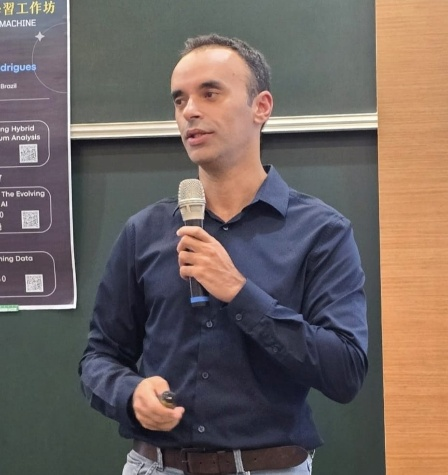
Prof.Erik Bohlin
Erik Bohlin is Professor and Chair in Telecommunication Economics, Policy and Regulation at the Ivey Business School, on leave as Professor at Chalmers University of Technology, Sweden. He is Editor-in-Chief of Telecommunications Policy, a premier journal in the field. His graduate degreeis in Business Administration and Economics at the Stockholm School of Economics (1987) and his Ph.D. is from Chalmers University of Technology (1995). He is a Member of the Swedish Royal Academy of Engineering, and Past Chair of the International Telecommunications Society, an inter-disciplinary professional society convening conferences on the evolving digital society and policy needs.
|

|
|
Philippe Lefebvre
Philippe Lefebvre is Senior Advisor at FIPRA, Brussels. He has built a career combining strategic leadership and engineering roles spanning the telecommunications and financial sectors, with experience in both the private sector and public policy at the EU level. Since July 2024, he has been working as an independent consultant, specialising in digital and telecommunications strategy, as well as advising clients in the fields of and decentralized finance (DeFi). From 1995 to 2024, Philippe held various middle management positions at the European Commission. In his most recent role, he was responsible for the Commission’s 5G deployment strategy, including policy development and investment incentive actions to achieve the connectivity targets of the EU Digital Decade Programme. Earlier in his career at the Commission, he held positions with responsibilities covering broadcasting regulation, radio spectrum policy, electronic commerce, and EU strategic research in the field of financial technologies and digital euro. Prior to joining the European Commission, Philippe began his career at Belgium’s Générale Bank, now Fortis Group, from (1983-1986). He then held management roles in the international payments industry, serving as Vice President, Technology Programmes at Eurocard, then Europe’s arm of Mastercard (1987-1991) and later as Director of Debit Products at Visa International in the U.S. (1992-1995). Born in Luxembourg, Philippe Lefebvre holds a MSc degree in Electrical and Mechanical Engineering and an BA in Economics, both from the Brussels University.
|
|
|
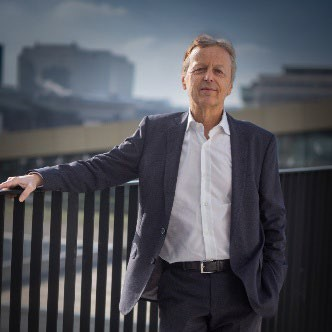
Prof.Gérard Pogorel
Gérard Pogorel is Professor of Economics-Emeritus, Institut Polytechnique de Paris-Telecom Paris Graduate School of Engineering. He is an independent expert in international telecommunications, media, and the digital economy. He published widely circulated and influential position papers and books: Paving the way for an integrated European Single Market for Connectivity (2025), Sustainable, Competitive? The EU’s Industrial Autonomy – Facts and Fantasies (European Liberal Forum 2024), 5G for Industry 4.0: Actors, Challenges, and a New Start for Europe, Spectrum 5.0 Re-thinking Spectrum Awards for Optimal 5G Deployment, and a reference book , The Radio Spectrum: Managing a Strategic Resource.
He co-founded the European Spectrum Management Conferences, acted as its Chair/Rapporteur, and is a frequent speaker in international conferences. An expert with the European Commission, and was Chair of the European Union Framework Research & Technology Development Programme Monitoring Panel, and Chair of the Monitoring Committee of the EU Information Society and Technologies Research Programme. He co-authored a report to the Prime Minister of Italy assessing the investments by operators in Broadband networks in the European Digital Agenda perspective. He participates in numerous international Government-level and regulatory authorities' committees and scientific committees on telecom and media policy and regulation in Europe and Asia. He is a Senior Fellow with the European Liberal Forum (European Parliament) and Officier des Palmes académiques.
|